Mental Health · 7 min read
Managing Anxiety: Evidence-Based Strategies That Help
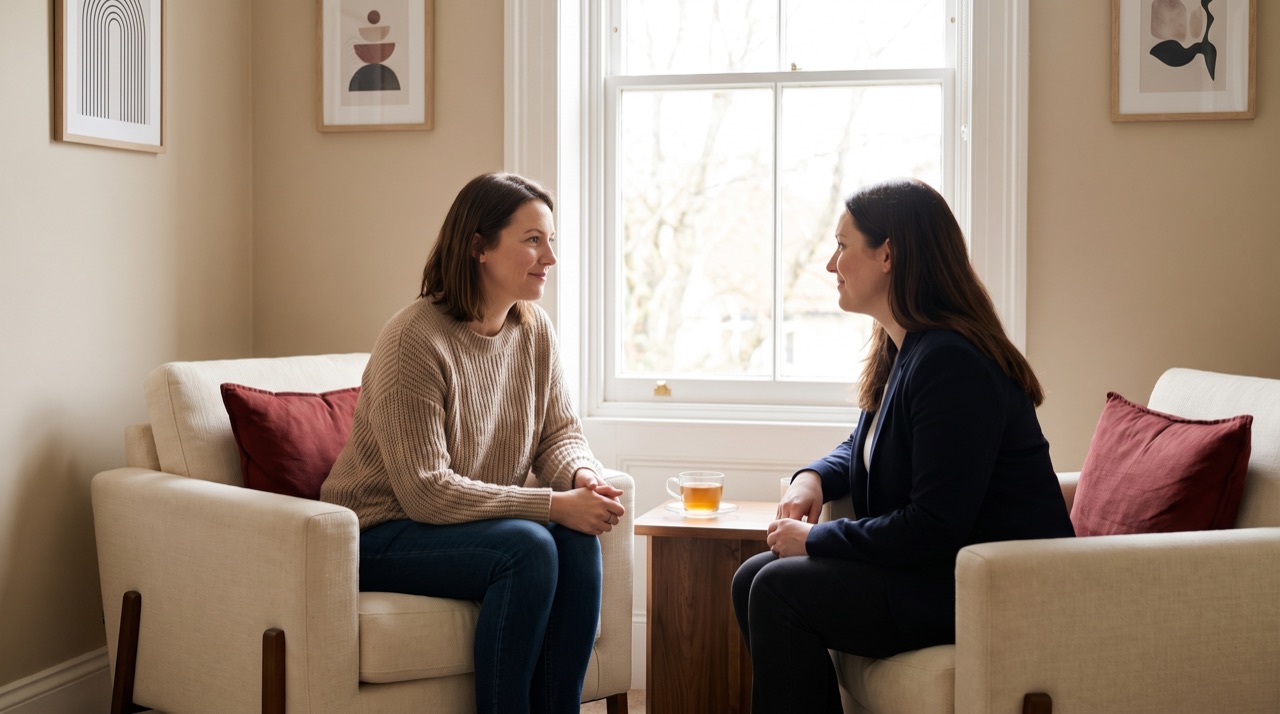
Anxiety treatment works best when therapy, medication, and daily habits are used deliberately together, not as separate fallback options.
Dr. Jezwah Harris · July 17, 2026
Anxiety is one of the most common conditions primary care and mental health clinicians treat, and it is also one of the most consistently over-simplified in general advice. "Try meditation" or "just relax" ignores that anxiety disorders have real, well-studied treatments, and the evidence points to a specific combination that works better than any single approach alone.
What the evidence actually supports
Cognitive behavioral therapy (CBT) has the strongest evidence base of any therapy approach for generalized anxiety disorder and panic disorder. It works by directly addressing the thought patterns and avoidance behaviors that maintain anxiety, rather than only providing a space to talk through feelings. A course of CBT is typically 12 to 16 sessions, and the skills are designed to continue working after treatment ends, which is part of why its evidence base holds up well over time.
Medication, primarily SSRIs and SNRIs, has separate strong evidence for moderate to severe anxiety. These medications take 4 to 6 weeks to reach full effect, with some improvement often visible by 2 to 3 weeks. This delay is one of the most common reasons people stop a medication that would have worked, concluding too early that it is not helping.
For moderate to severe anxiety, combined treatment, therapy plus medication, consistently outperforms either approach alone in clinical trials. This is not a sign that one approach failed. It reflects that the two work through different mechanisms and reinforce each other.
Where lifestyle changes fit in
Exercise, sleep regulation, and reduced caffeine intake have real evidence behind them, particularly for mild anxiety or as a support alongside formal treatment. Regular aerobic activity measurably reduces anxiety symptoms in multiple studies, likely through a combination of physiological and behavioral mechanisms. Sleep deprivation, even moderate, measurably worsens anxiety symptoms the following day, and this cuts both ways: treating anxiety often improves sleep, and prioritizing sleep supports anxiety treatment.
These changes are not a replacement for therapy or medication when anxiety is moderate to severe. They are a real, evidence-supported layer that works alongside formal treatment, not instead of it.
A newer, evidence-supported option
Digital, app-based mental health tools have grown quickly, and the evidence for them is more mixed than for established therapy and medication, but not absent. A 2026 systematic review and meta-analysis of prescription-eligible digital health applications found measurable symptom reduction for depression across multiple studies, with more limited but still positive evidence specifically for generalized anxiety disorder. These tools are reasonable as an adjunct, particularly where access to in-person therapy is limited, but the evidence base for anxiety specifically is still smaller than for depression.
Building a plan instead of guessing
The right combination depends on how severe your anxiety is, what has and has not worked before, and practical factors like access and preference. A clinician can help sort through this rather than trial-and-error on your own. Most major insurance plans, including Medicare, cover both therapy and psychiatric medication management, and starting that conversation is often the single highest-leverage step.
Questions
Is therapy or medication more effective for anxiety?
Both have strong evidence individually, and combined treatment generally outperforms either alone for moderate to severe anxiety. Which to start with depends on severity, access, and personal preference.
How long does it take for anxiety medication to work?
SSRIs and SNRIs typically take 4 to 6 weeks to show full effect, though some improvement can appear within 2 to 3 weeks. This is why they are not a same-day solution.
What type of therapy has the most evidence for anxiety?
Cognitive behavioral therapy (CBT) has the strongest evidence base for generalized anxiety disorder and panic disorder specifically, though other approaches can also help.
Can lifestyle changes alone manage anxiety?
For mild anxiety, exercise, sleep regulation, and caffeine reduction can meaningfully help. For moderate to severe anxiety, lifestyle changes support treatment but do not typically replace therapy or medication.
Are digital or app-based tools effective for anxiety?
A growing body of research on prescription-eligible digital mental health tools shows measurable symptom improvement, though evidence for anxiety specifically is still more limited than for depression.
Sources
- American Psychological Association. Clinical Practice Guideline for the Treatment of Anxiety Disorders.
- Bandelow B, et al. Efficacy of treatments for anxiety disorders: a meta-analysis. International Clinical Psychopharmacology (2015).
- Schmitz A, et al. Efficacy of prescription-eligible digital health applications for depression and generalized anxiety disorder in Germany: a systematic review and meta-analysis. Scientific Reports (2026).
- National Institute of Mental Health. Anxiety Disorders.