Dermatology · 7 min read
Treating Acne: What Actually Works, by the Evidence
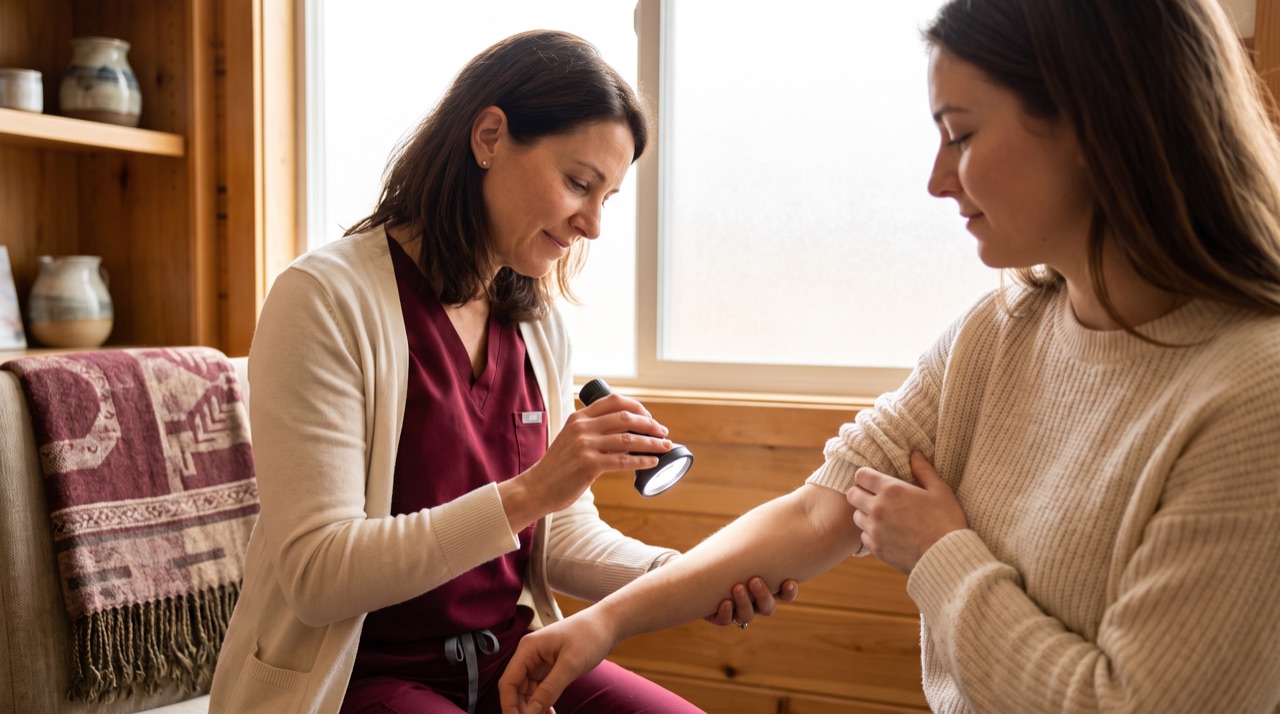
Most acne responds to a small set of well-studied treatments. Here is what has real evidence behind it, and what to try first.
Dr. Jezwah Harris · July 15, 2026
Acne treatment does not need to be complicated, but it does need to be consistent and given enough time to work. The evidence supports a fairly small set of treatments, and most acne, including moderate cases, responds to them when used correctly and for long enough.
First-line treatment for most acne
Topical retinoids are the backbone of acne treatment across current guidelines. They normalize the shedding of skin cells inside the follicle, which is the process that starts a pimple in the first place, and they also reduce inflammation over time. Adapalene, available over the counter, and tretinoin, available by prescription, are the most studied options.
Benzoyl peroxide is the other core treatment, and it works differently: it kills the bacteria (Cutibacterium acnes) associated with inflammatory acne and does not carry the resistance risk that antibiotics do. Combining a retinoid with benzoyl peroxide is more effective than either alone for most people with mild to moderate acne, and this combination is often the actual first step, not a step up after something simpler fails.
Why acne treatment "doesn't work" for so many people
The most common reason topical acne treatment appears ineffective is not that the treatment does not work. It is that it was stopped too early. Retinoids and benzoyl peroxide take 6 to 8 weeks to show visible improvement and up to 12 weeks for full effect, because the treatment is working on skin cells that are already in process, not eliminating existing pimples overnight. Many people stop at 2 to 3 weeks, conclude the treatment failed, and switch to something else, restarting the clock each time.
Irritation in the first few weeks, redness, peeling, dryness, is common and does not mean the treatment is failing. Starting with a lower concentration, applying every other night initially, and pairing with a basic moisturizer reduces this without reducing effectiveness.
When moderate acne needs more than topicals
If acne has not responded to 8 to 12 weeks of consistent topical treatment, or if it is moderate to severe, inflammatory, or leaving marks or scars, oral treatment is the next evidence-based step. Oral antibiotics (typically doxycycline) are effective for inflammatory acne, but current guidelines recommend limiting use to 3 to 4 months and always pairing them with benzoyl peroxide, which reduces the resistance that develops with antibiotic-only use.
For hormonally-driven acne in women, particularly acne along the jawline that flares with the menstrual cycle, combined oral contraceptives or spironolactone have real evidence behind them and work through a different mechanism than topical treatment.
For severe, scarring, or treatment-resistant acne, isotretinoin remains the most effective option available, with the highest rates of long-term clearance, though it requires monitoring and is not a first-line choice.
Building a plan that actually gets a fair trial
The single biggest factor in whether acne treatment works is whether it is given enough time, consistently, before being judged. A clinician can help you pick a starting combination appropriate to your skin and acne severity, and adjust from there based on what 8 to 12 weeks of real use actually shows. Most major insurance plans, including Medicare, cover a dermatology evaluation for acne that has not responded to over-the-counter treatment.
Questions
How long before acne treatment shows results?
Most topical treatments take 6 to 8 weeks to show meaningful improvement, and up to 12 weeks for full effect. Stopping early because you do not see change in two weeks is the most common reason treatment fails.
Is over-the-counter treatment enough for moderate acne?
For mild acne, often yes. For moderate to severe acne, or acne that has not responded to 8 to 12 weeks of consistent over-the-counter treatment, a prescription-strength option usually works faster and better.
Does diet cause acne?
The evidence is mixed but suggests high-glycemic-index diets and dairy may worsen acne in some people. Diet is not the primary driver for most people, and treatment should not wait on dietary changes alone.
Are oral antibiotics safe for acne?
They are effective short-term, generally for 3 to 4 months, but current guidelines recommend against long-term use due to antibiotic resistance concerns, and pairing them with benzoyl peroxide reduces resistance risk.
When should I see a clinician instead of treating acne myself?
If over-the-counter treatment has not worked after 8 to 12 weeks, if acne is leaving scars, or if it is cystic or nodular, a clinician can prescribe options not available over the counter.