Melasma
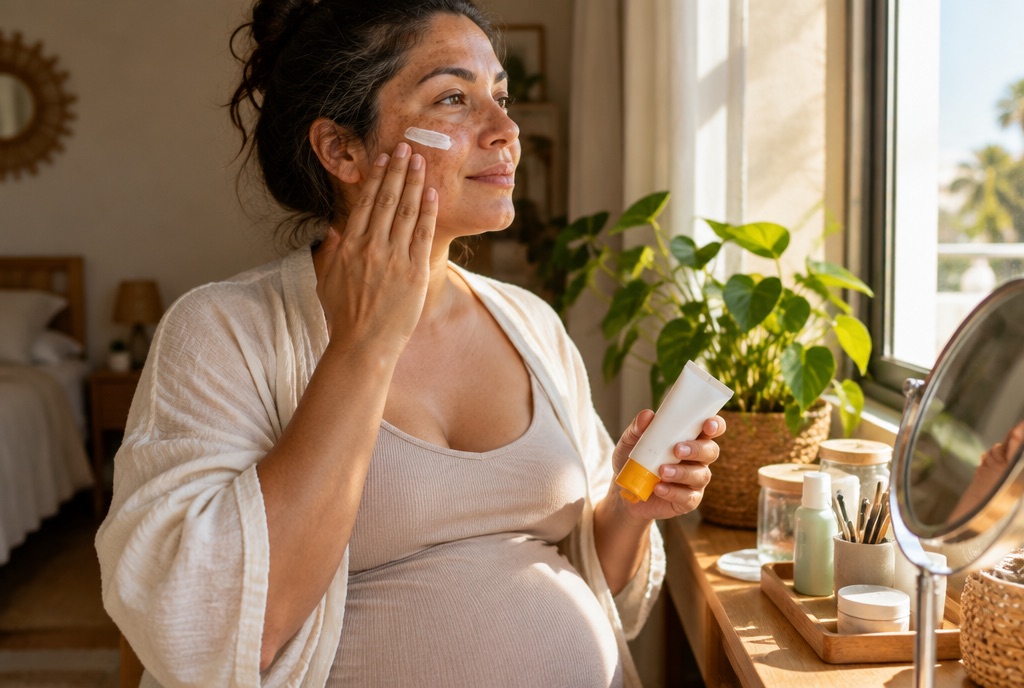
Melasma is a common acquired hyperpigmentation disorder driven by hormones and sun exposure, managed per current dermatology treatment reviews and the Pigmentary Disorders Society Delphi consensus.
Symptoms
Symmetric brown-to-gray-brown patches, usually on the cheeks, forehead, upper lip, and chin, that darken with sun exposure and often fade only partially between flares.
Causes and risk
Hormonal shifts (pregnancy, oral contraceptives), UV and visible-light exposure, and genetic predisposition all drive melasma; it is far more common in people with darker skin tones.
How it is evaluated
Diagnosis is clinical; a Wood's lamp can help classify pigment depth (epidermal, dermal, or mixed), which informs how well the pigment is likely to respond to treatment.
Treatment
Daily broad-spectrum, tinted sunscreen is foundational at every stage. Hydroquinone -- alone or in the triple-combination "Kligman formula" with a retinoid and steroid -- remains first-line per AAD and EADV guidance. Oral tranexamic acid is added for refractory cases, with caution around clotting risk and avoidance in pregnancy or with estrogen-containing contraceptives, per JAMA Dermatology guidance. Lasers are reserved for disease that does not respond to topicals.
When to seek care
Melasma itself is never an emergency. Any pigmented lesion that is changing shape, bleeding, or developing irregular borders should be evaluated to rule out melanoma rather than assumed to be melasma.