Thyroid Nodules
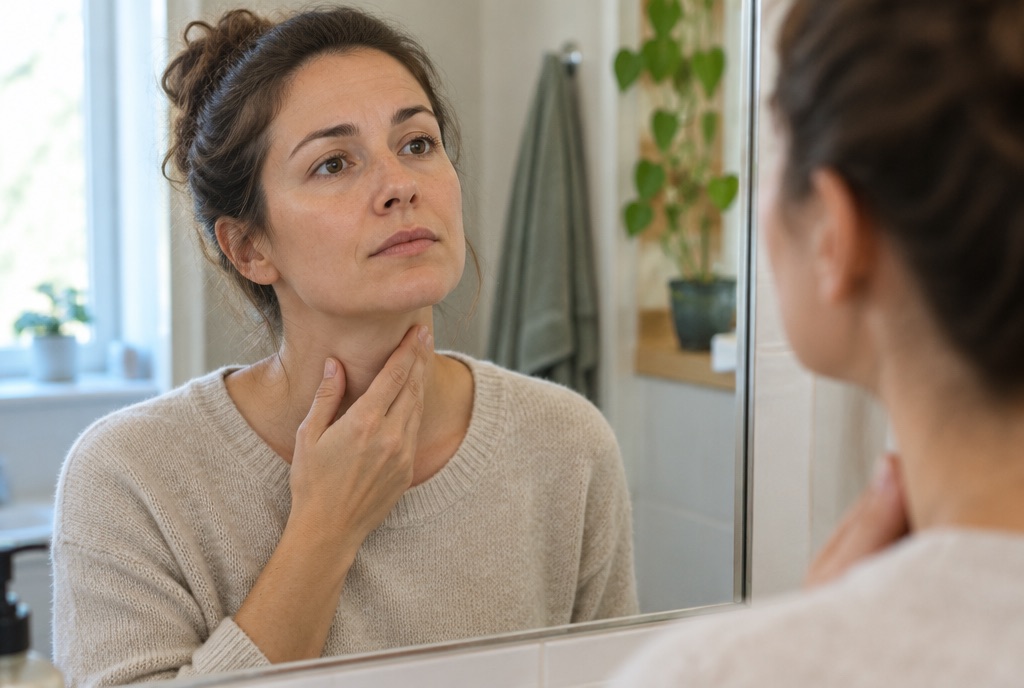
Thyroid nodules are extremely common -- about 5% are felt on exam, but up to 50-68% of adults have one on ultrasound -- and the large majority (about 90%) are benign, per a JAMA review.
Symptoms
Most nodules cause no symptoms and are found incidentally on imaging done for another reason. Larger nodules can cause a visible or palpable lump, or pressure symptoms (difficulty swallowing, a sense of fullness) if they grow enough.
Causes and risk
Most arise sporadically; iodine deficiency, radiation exposure, and family history all raise the odds of developing one.
How it is evaluated
Ultrasound risk-stratifies nodules by appearance -- the American Thyroid Association pattern-based system recommends biopsy at 1 cm for high/intermediate-suspicion patterns, 1.5 cm for low-suspicion, and 2 cm for very-low-suspicion; the ACR TI-RADS point-based system uses somewhat different thresholds, so it matters which system your radiologist used.
Treatment
Benign nodules are observed with periodic ultrasound. Nodules causing compressive symptoms or hyperfunctioning (toxic) nodules may be treated with radiofrequency ablation, radioactive iodine, or surgery depending on the situation.
When to seek care
A rapidly enlarging nodule, new hoarseness, or difficulty breathing or swallowing warrant prompt evaluation rather than waiting for a routine follow-up.