Hypertension
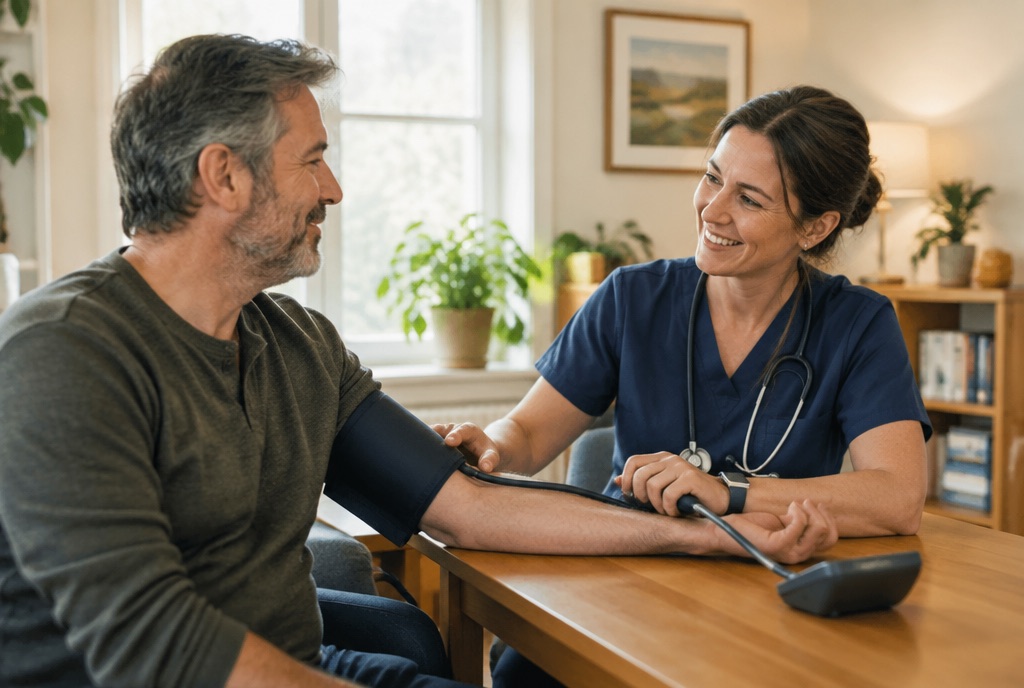
High blood pressure is one of the most common chronic conditions in the country and often has no symptoms. The 2025 AHA/ACC High Blood Pressure Guideline maintains the thresholds first set in the 2017 ACC/AHA guideline: Normal (below 120/80), Elevated (120-129/under 80), Stage 1 (130-139/80-89), and Stage 2 (140/90 or higher), confirmed on repeated, properly measured readings across at least two visits. Roughly 46-48% of U.S. adults meet these criteria, per 2024 CDC/NCHS national data.
Symptoms
Symptoms are usually absent, which is why routine screening matters more than waiting to feel unwell. Some people report headaches, dizziness, or blurry vision, but these are not reliable indicators and can occur with normal blood pressure just as easily. This is a lab- and cuff-driven diagnosis, not a symptom-driven one.
Causes and risk
Age, family history, excess sodium intake, obesity, diabetes, kidney disease, alcohol use, and poor sleep all raise risk. Most cases are primary (no single identifiable cause), but a smaller share is secondary to a condition such as kidney disease, sleep apnea, or a hormonal disorder like primary aldosteronism, which is worth ruling out when blood pressure resists treatment or appears at a young age.
How it is evaluated
We confirm the diagnosis with home and office readings using a validated device, then review current medicines, diet, exercise, sleep, and stress. Baseline labs typically check kidney function, blood sugar, cholesterol, and urine protein, plus an ECG, since these findings change both the urgency and the choice of treatment. Home monitoring with a properly sized, validated cuff is part of how a real diagnosis gets made, not just an in-office snapshot.
Treatment
Medication is generally started at 140/90 for most adults, and at 130/80 for people with heart disease, diabetes, chronic kidney disease, or elevated calculated 10-year cardiovascular risk. First-line drug classes per network meta-analysis evidence are thiazide-type diuretics, ACE inhibitors or ARBs, and long-acting calcium channel blockers. A DASH-style eating pattern, lower sodium intake, weight loss, regular exercise, and better sleep meaningfully lower blood pressure on their own -- a 10 mm Hg drop in systolic pressure lowers cardiovascular events by roughly 20-30%. The guideline's overall treatment goal is under 130/80.
When to seek care
A reading of 180/120 or higher, especially with chest pain, severe shortness of breath, new weakness, vision changes, or fainting, is a hypertensive emergency and needs immediate care. A high reading without those symptoms is still worth a same-week call, but is not itself a 911 situation.