Melanoma Screening
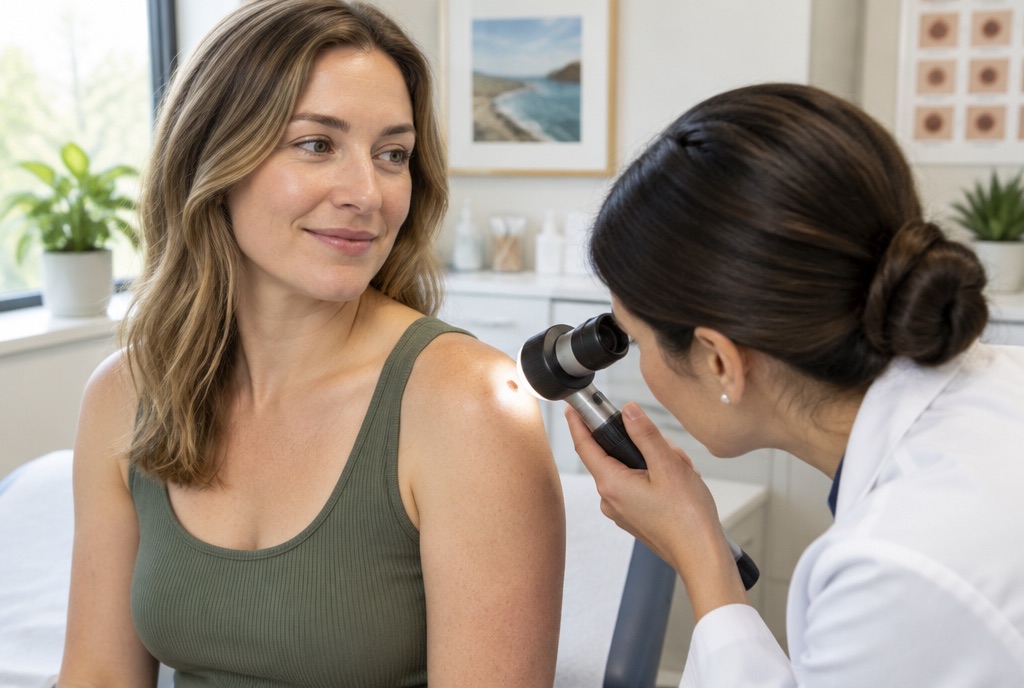
Melanoma screening uses the ABCDE criteria and individualized risk assessment to catch the most dangerous skin cancer early, per dermatology diagnostic criteria and the USPSTF 2023 screening recommendation.
Symptoms
Follow the ABCDE rule: Asymmetry, irregular Border, multiple Colors, Diameter over 6mm, and Evolution (any change in size, shape, or color) in a mole or new pigmented spot.
Causes and risk
A prior melanoma, atypical moles, having more than 100 moles, fair skin, significant UV exposure or tanning bed use, and a family history all raise risk; a prior melanoma raises risk roughly tenfold.
How it is evaluated
Dermoscopy aids visual assessment, and any suspicious lesion should be biopsied. The USPSTF 2023 statement is an "I" statement -- insufficient evidence for routine visual screening of asymptomatic people, not a recommendation against it -- while the American Academy of Dermatology, American Cancer Society, and Skin Cancer Foundation favor monthly self-exams and individualized higher-risk screening.
Treatment
Treatment is staged based on tumor thickness and spread: early-stage melanoma is treated with surgical excision, sentinel lymph node biopsy is considered at a thickness threshold of 0.8mm or with ulceration, and adjuvant immunotherapy is used for higher-stage disease.
When to seek care
Any mole or spot that is rapidly changing, bleeding, itching persistently, or newly appearing and unusual in adulthood should be evaluated promptly -- early detection is the single biggest factor in melanoma survival.